



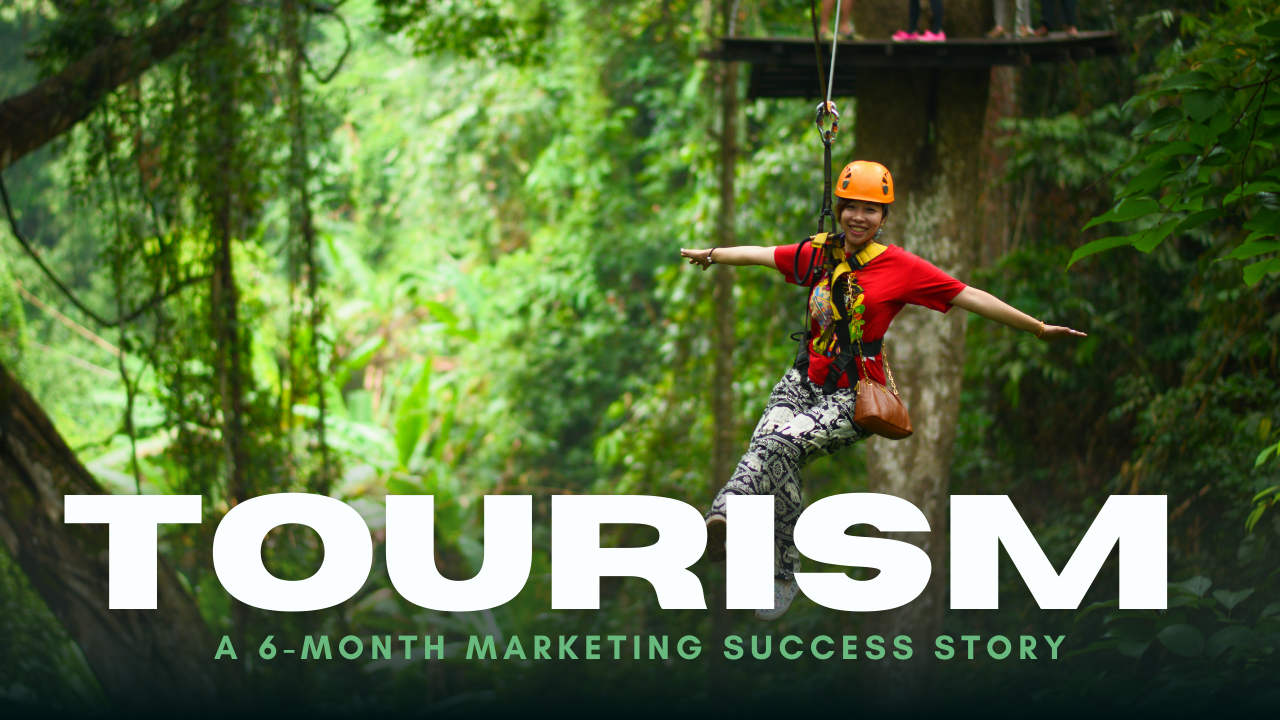
Tourism has always been one of Sri Lanka’s strongest economic drivers. Blessed with pristine beaches, lush tea estates, cultural heritage sites, and world-renowned hospitality, our island continues to attract travelers from around the globe. Yet, for businesses within the tourism sector—be it adventure operators, boutique hotels, or outing destinations—the challenge is not just attracting tourists but ensuring profitability and sustainable growth.
In today’s competitive market, it’s not enough to simply exist online. Customers expect professional brands, seamless booking systems, and value-packed experiences. That’s where smart marketing and business optimization come into play.
This article highlights a 6-month success story of a Sri Lankan tourism business that leveraged data-driven marketing, brand improvements, and package diversification to achieve 33.7% revenue growth, stronger profit margins, and an 8.3X ROI on marketing spend. Beyond the numbers, it also offers practical lessons for other tourism businesses looking to scale.
The Case Study at a Glance

Over six months (March – August), this business invested strategically in marketing and operations. Here are the highlights:
- Total Marketing Spend (6 months): ≈ LKR 323K
- Total Revenue Generated: LKR 2.6 Million
- Revenue Growth vs. Previous Period: +LKR 677,655 (~33.7%)
- Return on Marketing Spend (ROAS): ~8.3X
For every LKR 1 invested in marketing, the business generated LKR 8.3 in revenue.
These numbers demonstrate how combining pricing strategy, branding, and digital marketing execution can transform a tourism business within months.
Pricing: The Foundation of Profitability
One of the most common mistakes tourism businesses make is competing purely on price. While discounts and promotions are useful for attracting customers, underpricing can lead to long-term losses.
This business adjusted its packages strategically:
- Day Outing: From LKR 3,900 → LKR 4,900 (+25.6% margin improvement)
- Night Outing: From LKR 5,900 → LKR 6,900 (+16.9% margin improvement)
To remain competitive, a 10% discount was offered in the first 4.5 months. Even with these discounts, the new pricing model ensured higher margins per booking.
Lesson for Other Businesses:
- Don’t underprice—position your packages as value-driven experiences.
- Use discounts tactically (launch offers, seasonal promotions) rather than permanently.
- Periodically review costs vs. margins to ensure profitability scales with demand.
Expanding Packages & Experiences
Sri Lanka’s tourism is diverse, and travelers often look for customized experiences. Instead of sticking to traditional outing packages, the business launched new offerings:
- Staff Outing Packages – catering to corporates looking for team-building retreats
- Couple Packages – curated for romantic getaways
- Hike Packages – tapping into the adventure tourism trend
This diversification attracted new customer segments and reduced dependency on a single product line.
Lesson for Other Businesses:
- Add niche packages: wellness retreats, adventure tours, eco-travel, cultural experiences.
- Create seasonal offerings: New Year packages, Christmas specials, or summer adventure trips.
- Bundle services (e.g., transport + food + activities) for a premium yet value-packed product.
Branding: The Invisible Growth Engine
Travelers often book based on perception and trust. A strong brand identity makes a business look more professional, reliable, and worth the price.
To strengthen brand presence, we introduced:
- Professionally designed package proposals for B2B and corporate sales
- Refined logo formats and letterhead for consistency
- High-quality videos and photoshoots to visually showcase the experience
Why This Matters:
In tourism, visuals sell. A single professional video showcasing a serene hiking trail, a lively group outing, or a candlelit dinner can outperform thousands of words in convincing customers.
Lesson for Other Businesses:
- Invest in professional content (not just phone photos).
- Ensure brand consistency across brochures, websites, and social media.
- Highlight real customer experiences through testimonials and video snippets.
Digital Marketing in Action
While word of-mouth remains important, today’s tourists, both local and foreign,start their journey online. A strong digital presence ensures you’re visible at the decision-making stage.
For this campaign, efforts included:
- Running targeted ads to attract outing bookings.
- Optimizing landing pages for conversion-focused storytelling.
- Tracking results with a booking management system.
The outcome was clear: consistent leads, predictable revenue, and measurable ROI.
Key Digital Marketing Insights for Tourism:
- Social Media – Instagram Reels, TikTok videos, and Facebook ads showcasing “experiences” drive the highest engagement.
- SEO (Search Engine Optimization) – Ranking for “Sri Lanka hiking packages” or “corporate team outings Sri Lanka” ensures organic, long-term traffic.
- Google Ads – Helps capture intent-driven travelers searching for experiences right now.
- Email Marketing – Automated follow-ups for inquiries can convert unsure leads into paying customers.
Smarter Systems, Less Stress
Tourism businesses often lose revenue due to poor management systems—double bookings, missed follow-ups, or lost inquiries.
This business implemented:
- A Booking Management System via Google Sheets to track payments and availability.
- Sales Channel Expansion with bank partnerships and sponsorships.
The result? Less manual work, fewer errors, and better focus on growth.
Lesson for Other Businesses:
- Use simple but reliable systems (Google Sheets, Trello, or booking software).
- Track KPIs like inquiries, conversions, and repeat customers.
- Outsource non-core work (like marketing) to free up time for customer experience.
Tourism Trends & Opportunities in Sri Lanka
The Sri Lankan tourism industry is rebounding strongly after global challenges, but businesses must align with global travel trends to remain competitive.
Key Opportunities:
- Eco-Tourism & Sustainability – Travelers increasingly prefer eco-friendly stays and tours.
- Wellness Travel – Yoga retreats, meditation escapes, and spa packages are growing fast.
- Adventure Tourism – Hiking, diving, surfing, and camping are in high demand.
- Corporate Tourism – Team outings and corporate retreats are a growing domestic market.
- Digital Nomads – With Sri Lanka offering extended visas, businesses can target long-stay travelers.
By aligning with these trends, tourism operators can attract high-value customers rather than competing purely on price.
Lessons from This 6-Month Journey
This case study demonstrates that success in Sri Lanka’s tourism sector depends on more than just location—it’s about strategy, execution, and branding.
In six months, this business achieved:
- 33.7% revenue growth
- 8.3X ROI on marketing spend
- 16.9% – 25.6% margin improvements
- Stronger brand positioning
- More efficient systems
Action Plan for Tourism Businesses
If you’re a tourism operator in Sri Lanka, here’s how to replicate similar results:
- Audit Your Pricing – Are you undercharging? Can you improve margins?
- Diversify Packages – Introduce couple, corporate, or adventure packages.
- Invest in Branding – Professional photos/videos + consistent identity.
- Leverage Digital Marketing – SEO, social media ads, and content marketing.
- Implement Systems – Track bookings, inquiries, and revenue effectively.
- Focus on Customer Experience – Encourage reviews, referrals, and repeat visits.
The Future of Tourism in Sri Lanka
With global demand for unique travel experiences rising, Sri Lanka is perfectly positioned to capture this wave. But only businesses that are strategic, professional, and customer-focused will win the race.
The tourism business in this case study is proof: with smart marketing and operational improvements, growth isn’t just possible—it’s scalable.
Conclusion
In just six months, a Sri Lankan tourism operator achieved 33.7% revenue growth, 25%+ margin improvements, and an 8.3X ROI. They diversified packages, strengthened their brand, and streamlined operations—all while freeing up the owner’s time.
This isn’t a one-off success story. It’s a blueprint for how tourism businesses in Sri Lanka can grow sustainably.
👉 If you’re running a tourism business and want to scale with proven, ROI-driven strategies, now is the time to act.