

In today’s competitive marketplace, businesses—especially small and mid-sized ones—are constantly looking for ways to grow smarter, not just faster. At Veloz Marketing, we’ve seen one strategy consistently make the difference between businesses that scale sustainably and those that stall: KPI-driven strategy.
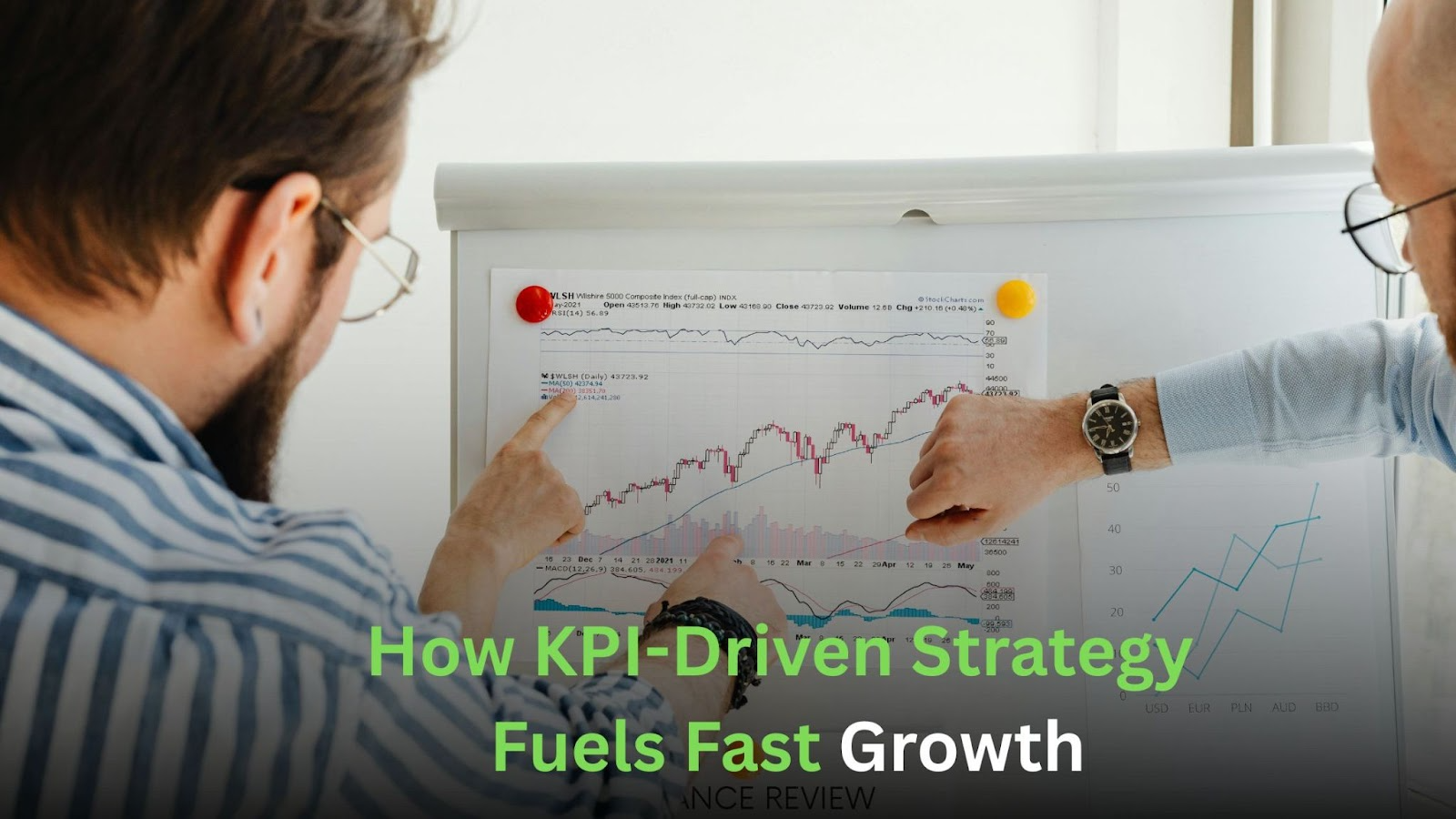
KPIs (Key Performance Indicators) aren’t just numbers on a dashboard—they’re the compass that helps guide businesses toward growth, align teams, and measure success effectively. If you’ve ever wondered how KPIs increase performance, why they matter in strategic planning, or how you can use them to fuel fast growth, this blog will break it down for you step by step.
What Are KPIs (and Why They Matter)?
At the simplest level, KPIs are measurable values that show how effectively a business is achieving its key objectives. They answer the question: “Are we on track?”
- Financial KPIs → Revenue growth, profit margins, CAC (Customer Acquisition Cost).
- Marketing KPIs → Website traffic, MQL to SQL conversion, cost per lead.
- Sales KPIs → Win rate, sales cycle length, average deal size.
- Customer Success KPIs → Churn rate, Net Promoter Score (NPS), Customer Lifetime Value (CLV).
- Operational KPIs → Productivity, delivery times, project efficiency.
When KPIs are chosen wisely, they create clarity and accountability. Instead of vague goals like “increase sales,” KPIs force precision: “Increase monthly recurring revenue by 15% in the next quarter.”
How Do KPIs Increase Performance?
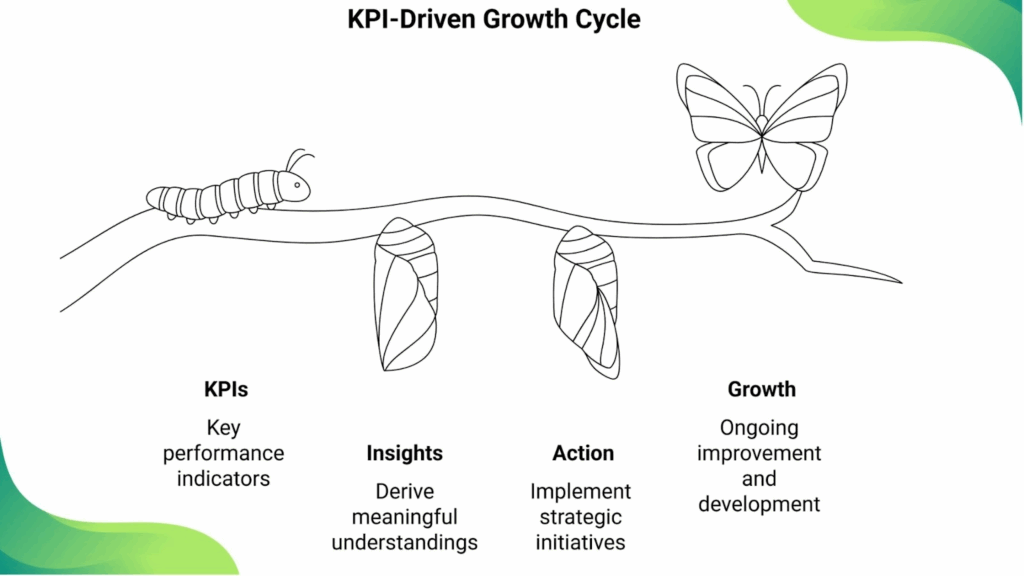
- Focus and Alignment
KPIs keep everyone rowing in the same direction. A marketing team measuring cost per acquisition works hand-in-hand with a sales team targeting conversion rates. - Motivation and Accountability
People perform better when success is measurable. Seeing progress toward a KPI energizes teams. - Early Warning Signals
KPIs highlight risks before they become problems. If customer churn is rising, you can intervene before revenue declines. - Data-Driven Decisions
Instead of relying on gut instinct, businesses can pivot quickly with real insights.
At Veloz Marketing, we often remind clients: “What gets measured, gets managed—and what gets managed, grows.”
Why Are KPIs Important for a Strategic Plan?
Without KPIs, a strategic plan is just a wish list. KPIs turn strategy into execution by:
- Translating big-picture goals into measurable targets.
- Tracking whether initiatives are delivering ROI.
- Allowing leadership to reallocate resources quickly if something isn’t working.
For example, if your strategic plan aims to expand into new markets, KPIs like new market revenue contribution or brand awareness in target geography will indicate whether the plan is working.
What Is KPI-Driven Performance?
KPI-driven performance means running your business with KPIs at the core of every decision.
Instead of setting a campaign live and hoping for results, KPI-driven businesses track key metrics daily or weekly, adjust strategies in real time, and continuously improve.
It’s less about doing more things and more about doing the right things—and proving their impact.
What Is KPI in Growth?
When it comes to growth, KPIs become the engine that drives scalability.
- For marketing growth: Track website traffic, lead quality, and conversion rates.
- For sales growth: Monitor pipeline health, sales velocity, and average deal size.
- For customer growth: Reduce churn, improve retention, and increase lifetime value.
Growth KPIs make expansion measurable. Without them, “growth” is just a buzzword.
How Businesses Choose the Right KPIs
Choosing KPIs isn’t about tracking everything—it’s about tracking what matters most.
- Tie to business objectives – If your goal is revenue, track CAC and CLV.
- Make them measurable – Use real numbers, not vague outcomes.
- Balance leading and lagging indicators – (More on this below.)
- Keep it simple – Too many KPIs create noise.
At Veloz Marketing, we help clients identify 3–5 core KPIs per department. That’s enough to drive focus without overwhelming teams.
Leading vs Lagging KPIs (with Examples)
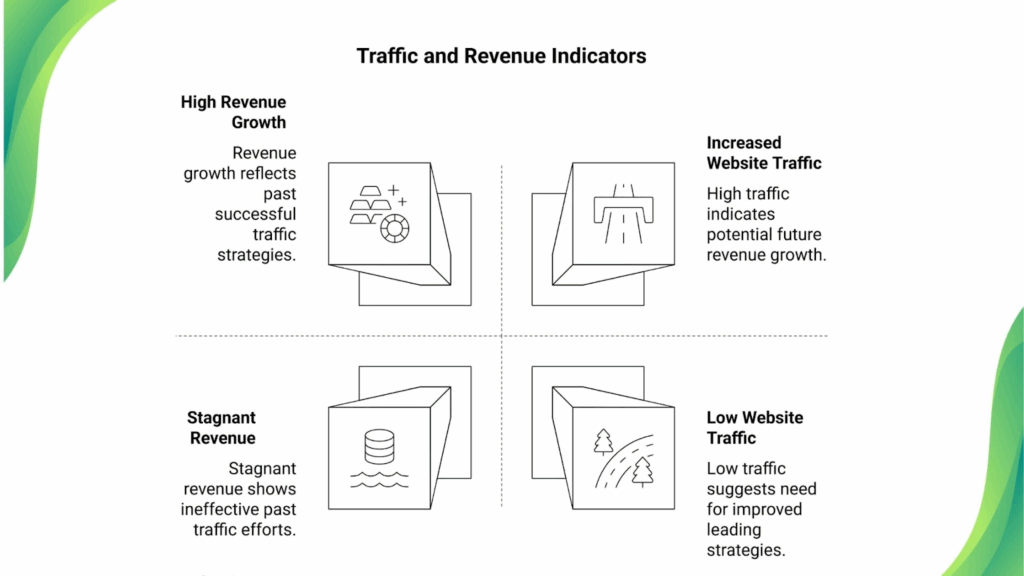
- Leading KPIs → Predict future performance. Example: Website traffic (predicts future leads).
- Lagging KPIs → Show results after they happen. Example: Revenue (tells you what already happened).
Both are essential. Leading KPIs guide proactive action, while lagging KPIs validate outcomes.
Benefits of KPI-Driven Performance for Small & Mid-Sized Businesses
- Agility – You can pivot quickly without wasting resources.
- Clarity – Everyone knows what success looks like.
- Efficiency – Resources go to what actually drives results.
- Confidence – Decisions are backed by numbers, not guesswork.
When smaller businesses adopt KPI-driven strategy, they often gain a competitive edge over bigger players who move slower.
Actionable Strategies to Implement KPI-Driven Growth
- Start Small
Pick a handful of KPIs that align with your growth objectives. - Set SMART Goals
Specific, Measurable, Achievable, Relevant, Time-bound. - Use Dashboards
Tools like Google Analytics, HubSpot, or Power BI make data visual and actionable. - Review Weekly, Not Annually
Regular check-ins prevent surprises. - Connect KPIs Across Departments
Marketing KPIs should flow into sales KPIs, which connect to customer success KPIs.
Real-World Example: A Local E-Commerce Brand
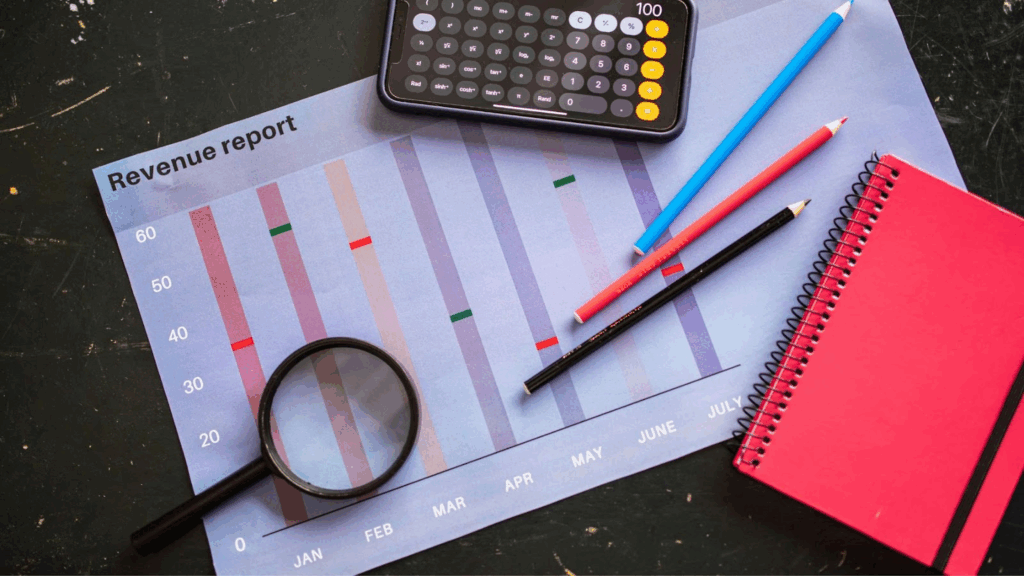
A mid-sized e-commerce company came to Veloz Marketing struggling with stagnant growth. They were investing in ads, but couldn’t connect the spend to results.
We applied a KPI-driven strategy:
- Marketing KPIs: ROAS (Return on Ad Spend), CTR, cost per conversion.
- Sales KPIs: Average order value, repeat purchase rate.
- Customer Success KPIs: Churn rate, CLV.
Within 6 months:
- Revenue grew 38%.
- Customer acquisition cost dropped 22%.
- CLV increased 15%.
The difference? Clear KPIs and disciplined execution.
Tools That Support KPI Measurement
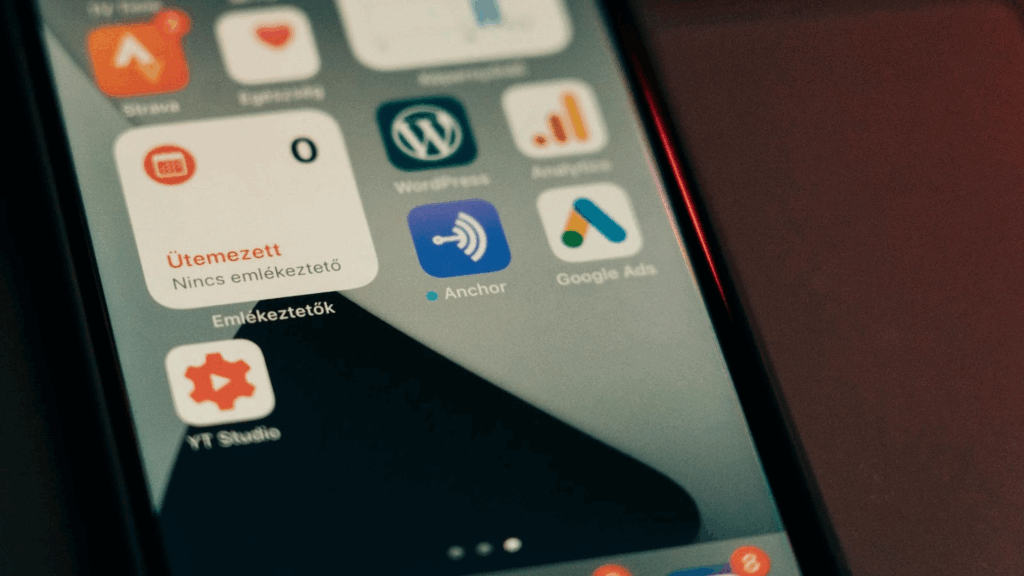
- Google Analytics → Track traffic, conversions, customer behavior.
- HubSpot → All-in-one CRM with marketing, sales, and service KPIs.
- Power BI → Advanced dashboards for custom KPI reporting.
- Hotjar → Customer behavior insights (heatmaps, session recordings).
Common Mistakes Businesses Make with KPIs
- Tracking vanity metrics (likes, followers) that don’t impact revenue.
- Too many KPIs – Dilutes focus.
- Not aligning KPIs with strategy – Misleading results.
- Ignoring qualitative insights – Numbers alone don’t tell the full story.
- Setting unrealistic targets – Leads to frustration and burnout.
Quick Growth Tactics with KPI-Driven Strategy
- Run A/B tests in ads and track CTR, CPA.
- Improve website conversion rates and measure bounce rate reduction.
- Reduce sales cycle time by automating lead nurturing.
- Boost customer retention with NPS surveys and track churn.
Small tweaks, when guided by KPIs, compound into big growth.
How KPI Insights Feed into Marketing, Sales, and Retention
- Marketing → Focus on the campaigns delivering the highest ROI.
- Sales → Prioritize leads with higher conversion probability.
- Customer Retention → Identify churn triggers early and implement loyalty programs.
At Veloz Marketing, we integrate KPI insights across the entire funnel—helping clients grow sustainably, not just quickly.
Conclusion: Why Work with Veloz Marketing?
A KPI-driven strategy fuels fast growth by aligning goals, tracking progress, and optimizing performance. For small and mid-sized businesses, it’s not just a framework—it’s the difference between scaling successfully or wasting resources.
At Veloz Marketing, we specialize in KPI-driven performance strategies that combine marketing, sales, and customer success into one growth engine. If you’re ready to measure what matters and accelerate growth, let’s talk.
👉 Work with Veloz Marketing today and start building a KPI-driven path to success.